Enable High Contrast Mode
Disable High Contrast Mode
April 3, 2026
Each spring, something extraordinary happens overhead here in the Hudson Valley—largely unseen, often unheard, yet unfolding on a massive scale. At the Wallkill Valley Land Trust (WVLT), we are fortunate to witness this migration not as a novelty, but as a vital, recurring ecological event.
A Sky Filled with Travelers
As the snow melts and temperatures rise, migratory birds move north by the tens of thousands—some traveling hundreds or even thousands of miles—to reach breeding grounds across the Northeast and beyond. These journeys are driven by instinct, daylight changes, and food availability, forming one of the most remarkable natural phenomena on Earth.
The Hudson Valley sits directly within this migratory corridor. Our forests, fields, wetlands, and protected lands provide essential stopover habitat—places to rest, feed, and ultimately raise young.
The American Woodcock: A Bird You Hear Before You See
If you’ve spent time outdoors at dusk recently, you may have heard a distinctive nasal “peent” followed by a spiraling, twittering flight overhead.
That’s the American woodcock.
These birds migrate north each spring and are known for their dramatic courtship displays, where males launch into the air at twilight to attract mates. Though they may appear in unexpected places—like Bryant Park—they depend on quiet, brushy habitats like those protected by WVLT.
In fact, woodcocks have been observed nesting on WVLT-protected lands, a powerful reminder that conservation directly supports wildlife at critical moments in their life cycle. Take a moment tonight to listen for the American woodcock. (Note: WVLT executive director Christie DeBoer has heard these camouflaged birds annually at her property in Accord, NY and they are they are actively out this week first week of April.)
LISTEN TO THE AMERICAN WOODCOCK
Ruby-throated Hummingbird: A Long Journey for a Tiny Traveler
Soon, another remarkable migrant will arrive: the ruby-throated hummingbird.
Despite weighing less than a nickel, these birds travel from Central America to the Northeast each spring—some even crossing the Gulf of Mexico in a single, non-stop flight of up to 500 miles.
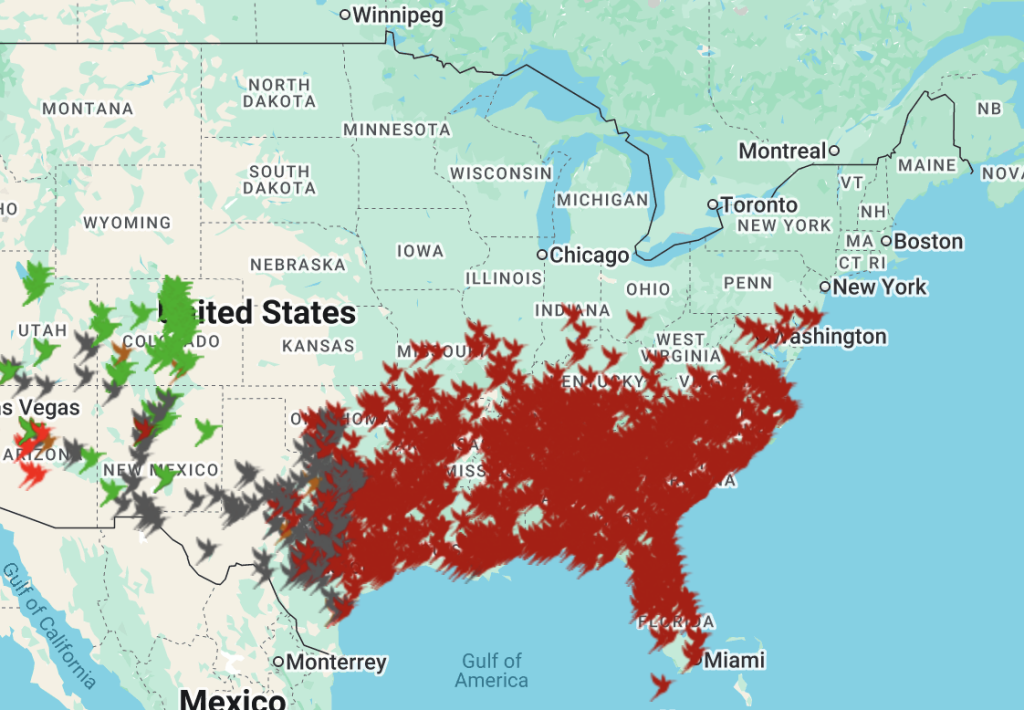
Hummingbird Central Sightings and Migration Map
They time their arrival precisely with the blooming of nectar-rich flowers, making them both pollinators and indicators of seasonal change. You can visit a live tracking map HERE that updates as ruby-throated hummingbirds migrate north. Historically sightings in the Hudson Valley have occurred as early as the last week of April but May is their usual arrival date.
The Wood Thrush: A Voice of the Forest
Another iconic migrant returning to our region is the wood thrush, known for its ethereal, flute-like song that echoes through deciduous forests.
Wood thrush populations have declined significantly due to habitat loss, making intact forest ecosystems—like those protected by WVLT—especially important for their survival.
Their return each spring is both a celebration and a call to action. Check out their musical song HERE.
Why Conservation Matters During Migration
Migration is a high-risk journey. Birds depend on a chain of healthy habitats along their route—if even one link is broken, it can have cascading effects.
Protected lands in Ulster County play a crucial role in this network.
They provide:
When WVLT conserves land, we are not just protecting scenery—we are safeguarding entire life cycles.
Listen Closely—Migration Is All Around Us
The next time you step outside—whether on a misty evening or at first light—pause and take it in.
You might hear the soft “peent” of a woodcock spiraling into the twilight. You might catch the flash of wings from a returning songbird. Or, if the conditions are just right, you might notice the quiet movement of salamanders and frogs making their way to breeding pools under cover of darkness.
From the forest floor to the open sky, migration is happening all around us.
These seasonal movements connect landscapes, species, and ecosystems in ways we are only beginning to fully understand. And here in Ulster County, protected lands ensure that these journeys—both small and vast—can continue for generations to come.